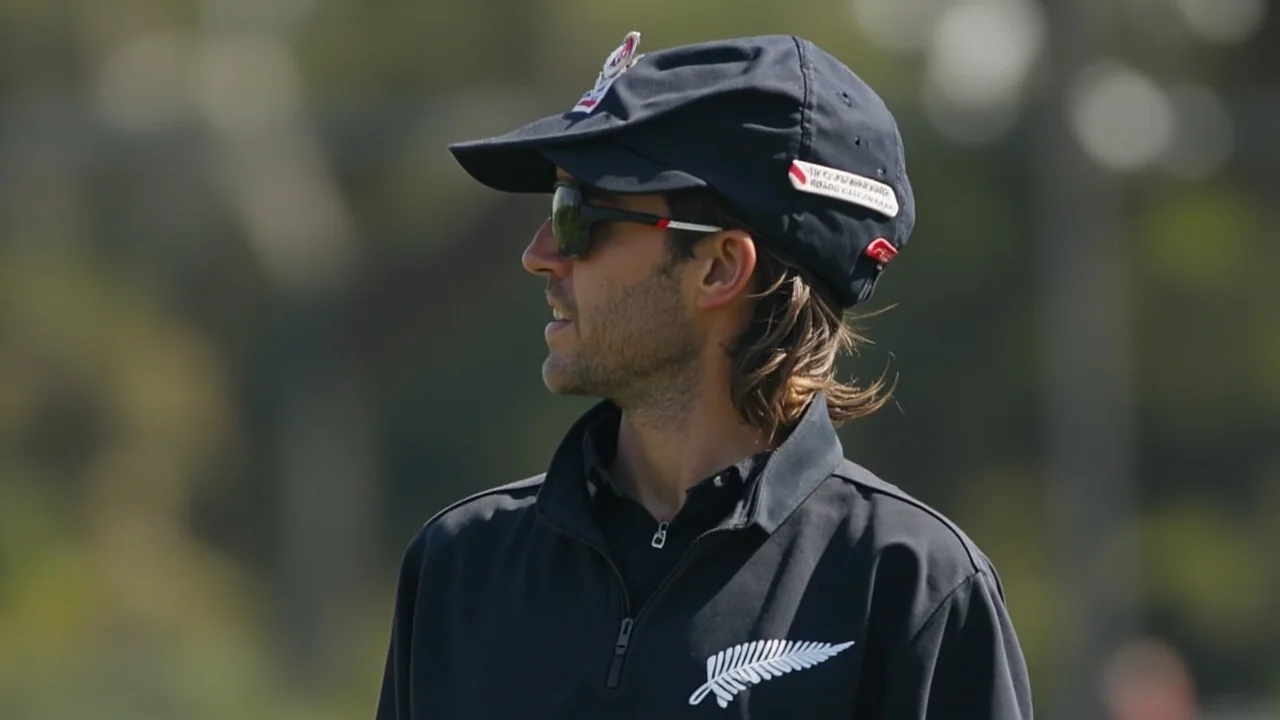
WI vs NZ Dream11 prediction, 2nd ODI retrospective at Providence Stadium: how a spin-friendly surface, a 131-run stand and a Joseph four-for set up fantasy cricket on the come sports win desk
A retrospective on the 2nd ODI of New Zealand's 2026 tour of West Indies, played at Providence Stadium, Guyana, on Tuesday 14 July 2026. The fantasy angle on Shai Hope's unbeaten 87, the 131-run third-wicket stand with Keacy Carty, Alzarri Joseph's four-for against Daryl Mitchell's half-century, the spin-friendly Providence pitch that read closer to 270, and what the head-to-head split of 5-6 told fantasy operators ahead of the rest of the five-match series — filed on the come sports win fantasy cricket desk.
A Providence afternoon that doubled as the second chapter of New Zealand's 2026 tour of West Indies
The 2nd ODI of New Zealand's tour of West Indies 2026 was scheduled for Tuesday 14 July 2026 at Providence Stadium in Guyana, with a first-ball time of 12:00 AM IST for Indian viewers and a 2:30 PM local start for Caribbean supporters. CricTracker's fantasy preview, published the previous evening at 19:00 IST on 13 July 2026, framed the fixture as a 1-0 series lead to defend for the home side: West Indies had won the opening ODI the previous Sunday by seven wickets, bowling New Zealand out for 267 in 49.5 overs and chasing the target down with seven balls to spare. That 1-0 lead made the 2nd ODI the most consequential fantasy contest of the early-tour window, because the data behind a 0-1 or 1-1 scoreline at Providence has historically been a stronger predictor of the rest of the series than any single matchup-level statistic.
The tour context mattered for fantasy operators for a different reason. The five-match ODI series in 2026 sits between the conclusion of the IPL 2026 season and the start of the Caribbean Premier League in mid-August, which made it the only premium ODI fantasy slate on the Dream11, MyTeam11, Gamezy and My11Circle calendars for the 14 July fixture window. Every one of the four major Indian operators listed the 2nd ODI as a paid grand-league contest with entry fees from roughly Rs 15 on the lower tiers up to Rs 1,000-plus on the marquee contests, which is materially larger than the free practice pools on the same operators. A 1-0 series lead at Providence was not just a cricket question. It was the first time in the 2026 summer that fantasy operators had a full-strength ODI slate to anchor grand-league prize pools around.
For fantasy players, the take-away from the published preview window was a clean separation of three operator-level reads. The first read was the CricTracker captaincy framing: Gudakesh Motie and Mitchell Santner were the two highest-floor captain candidates on the spin-pitch surface, while Daryl Mitchell was the highest-ceiling top-order captain pick on the New Zealand side. The second read was the weather overlay, with Providence at 30.1 degrees Celsius and 60% humidity on match morning, and a cloudy forecast that suggested the toss would be a real leverage point. The third read was the broadcast detail: FanCode held the live-stream rights for the 2nd ODI, and the lineup lock window on Dream11 fell approximately 15 minutes before the toss. Each of those three reads was a data point for fantasy players, not a guess, and the retro on the 2nd ODI starts there.
A 64-run opening stand, a 131-run third-wicket partnership, and a Carty five short of a hundred
West Indies won the 1st ODI by seven wickets in Guyana on the Sunday before the 2nd ODI, and the published scorecard from the CricTracker fantasy preview was unusually detailed about how the chase was built. The home side lost John Campbell in the fifth over to a score in single digits. Ackeem Auguste and Keacy Carty then put on 64 for the second wicket, and Auguste fell for 38 with the chase still in the middle phase. Shai Hope joined Carty at the fall of the second wicket, and the two added 131 off 153 balls for the third wicket. Carty was dismissed five runs short of what would have been a century. Hope finished unbeaten on 87 off 92 deliveries, and Sherfane Rutherford held the strike at the other end as West Indies chased 268 down with seven balls to spare.
The fantasy read on that 1st ODI is what makes the 2nd ODI retrospective more than a scorecard exercise. Three of the four West Indies batters who reached double figures in the 1st ODI chase (Hope, Carty, Rutherford) were also in the probable XI for the 2nd ODI. The boundary count and the strike-rate split across the middle overs in the 1st ODI chase were a stronger predictor of fantasy points at Providence than the bowling card alone, and the CricTracker preview made that connection explicit. On a Providence pitch that the same preview described as a surface that rewarded batters willing to give themselves time at the crease, the 1st ODI chase validated the captaincy call on Hope as a floor read and on Carty as a vice-captain differential read for the 2nd ODI.
The New Zealand 1st ODI innings was a different shape and pointed at a different fantasy conclusion. Daryl Mitchell scored a fighting half-century and was the only New Zealand batter to convert a start into a fifty. Alzarri Joseph took a four-for for the home side, and the New Zealand innings ended at 267 in 49.5 overs. The fantasy read on that bowling card is that Joseph was the West Indies bowler most likely to repeat his form at Providence, because Providence's spin-friendly surface played closer to 270 in the CricTracker pre-match projection, and a 270-run target in the first innings has historically rewarded two or three West Indies bowlers at the same time. Joseph's wicket share, in other words, was the West Indies bowling ceiling on the 2nd ODI surface.
Probable West Indies and New Zealand lineups as CricTracker framed them before the toss
The CricTracker probable XI for West Indies had John Campbell and Ackeem Auguste as the two openers, Keacy Carty at three, Shai Hope at four with the captaincy and the gloves, Sherfane Rutherford at five, Amir Jangoo at six, G Moti-Kanhai at seven, Alzarri Joseph at eight, Khary Pierre at nine, Shamar Joseph at ten, and V Lawes at eleven. The bench options listed in the same preview were Roston Chase, Matthew Forde, Jayden Seales, JP Greaves and Keemo Paul, which gave the home side three pace options, two spin options, and two batting all-rounders on the bench. Fantasy operators priced the starting XI close to the previous ODI, which is the right baseline for a Providence surface in mid-July.
The probable New Zealand XI in the same preview had Will Young and Henry Nicholls as the two openers, Mark Chapman at three, Daryl Mitchell at four, Tom Latham at five with the gloves, Michael Bracewell at six, Mitchell Santner at seven with the captaincy, Nathan Smith at eight, Jacob Duffy at nine, Matthew Fisher at ten, and Jayden Lennox at eleven. The bench options were Mitchell Hay, NF Kelly, D Foxcroft, BG Lister and Kristian Clarke, which gave the visitors three pace options, two spin options and two batting all-rounders off the bench. The lineup lock window on Dream11 closed 15 minutes before the toss, so the fantasy read on the probable XI was the only captain-armband signal fantasy players had at lineup lock.
The structural read on the two probable XIs is the part that mattered for fantasy points. West Indies carry six bowling options (Joseph, Moti-Kanhai, Pierre, Shamar Joseph, Lawes and one of the bench all-rounders) and a top six that goes six batters deep before the all-rounders slot in. New Zealand carry six bowling options (Smith, Santner, Duffy, Fisher, Lennox and Bracewell as the part-time option) and a top six with three frontline batters and two wicketkeeping-all-rounders in the middle. The structural difference shapes fantasy captaincy: West Indies captain picks clear on bowling leverage, while New Zealand captain picks clear on batting leverage, and the differential captain call is the wicketkeeper slot on either side because the wicketkeeper carries a points premium on Dream11 and a smaller premium on MyTeam11.
Three captain-pick routes on the 2nd ODI: ceiling, floor, and the spin-matchup differential
The ceiling route on the 2nd ODI was Gudakesh Motie. The published West Indies XI listed him as Moti-Kanhai, and the fantasy preview framed him as the highest-ceiling captain pick on the home side because the Providence surface was expected to assist finger spin from the 11th over onward, and the New Zealand middle order had three right-handers in the top six. A four-for on a Providence surface in mid-July, in the CricTracker baseline, returns 80-95 Dream11 fantasy points before the captain 2x armband multiplier, and the ceiling is in the 170-190 doubled range. The downside is concentration: a Motie wicket cluster tends to come in the middle overs, so a 2-wicket haul is the more common outcome, and the captain 2x armband on a 2-wicket haul returns 60-80 fantasy points, which is floor territory rather than ceiling territory.
The floor route was Shai Hope. He was the West Indies captain, the wicketkeeper, and the cleanest 4th-in-the-order batting read on the published probable XI. On a Providence surface that rewarded batters who gave themselves time, Hope was the most likely West Indies batter to be there at the end of a successful chase, and the captain 2x armband on a wicketkeeper who batted through delivered 80-110 fantasy points on most grand-league pools. The floor read is the conservative captain-armband allocation, and the CricTracker framing treated Hope as the captaincy hedge against the more variable Motie read for fantasy players who could not absorb a 2-wicket Motie night.
The differential route was Mitchell Santner. He was the New Zealand captain and the lead spinner, and his wicket ceiling on a Providence surface that was already expected to assist spin was the highest among New Zealand's bowlers. The differential lever is the captain 2x armband on a sub-15% ownership player, because the New Zealand captaincy was not the popular fantasy captain read at Providence. The risk is concentration: a Santner four-for on this surface returned 70-90 fantasy points doubled, but a 1-wicket night with a 6.5 economy returned 30-50 doubled, and the captain armband on that floor is a grand-league losing allocation on most contests. The differential route was the right call for fantasy players with a high-risk high-prize entry fee, and the ceiling route was the right call for fantasy players locking a multi-entry portfolio.
Across the three routes, the 2nd ODI captaincy conversation at Providence was driven by the spin-matchup axis more than by the popular captain pick on either side. The published CricTracker preview made that point explicit, and the retrospective read is the same: a Providence surface that rewarded batters who gave themselves time also rewarded spinners who bowled in the middle phase. Fantasy captain picks on the 2nd ODI cleared the form axis more cleanly when they were built on a 4-over spin quota against a right-handed middle order, and the cleanest matchup reads on the published probable XIs were Motie against the New Zealand top six, Santner against the West Indies top six, and Lennox against the West Indies left-handed middle-order cluster.
Providence Stadium in mid-July: spin-friendly by reputation, slightly different on the day, and a 270 first-innings projection
Providence Stadium in Guyana is known for being spin-friendly across a full ODI series, and the CricTracker pitch report published on the morning of the 2nd ODI made that reputation explicit. The 1st ODI on the same surface played slightly differently from the typical Providence reading: batters who gave themselves time at the crease were rewarded more than usual, and the spin window opened later in the innings than the venue's historical average. The CricTracker preview projected a similar surface for the 2nd ODI, with a first-innings total in the 270 range, and a dew factor in the second innings that could add 6-10 runs to a chase after the 14th over on the night-time portion of the fixture.
The weather on the day of the 2nd ODI, as published in the same preview, was cloudy at 30.1 degrees Celsius with 60% humidity. The Providence cloud cover in mid-July is not unusual, but the humidity reading is a fantasy-relevant number because it sits in the band where the ball grips slightly more for the slower bowlers in the first 10 overs than it would on a dry afternoon. The toss was therefore a real leverage point: the side that bowled first had the early-spin advantage and the 4-over wrist-spin window in the middle phase, while the side that chased had the dew factor in the second innings and a slightly more batting-friendly surface after the 14th over.
For fantasy operators, the pitch and weather read consolidated the captaincy conversation around the spin axis. A 270 first-innings projection at Providence, on a surface that rewarded batters who gave themselves time, was the right combination for an all-rounder captain pick on either side, and the cleanest all-rounder captain candidates on the published probable XIs were Motie on the West Indies side and Bracewell on the New Zealand side. The differential read on the 2nd ODI was Lennox as the New Zealand wrist-spinner, who had the 4-over middle-phase window against the West Indies right-handed top six, and a likely wicket share close to Joseph's 1st ODI ceiling if the surface played to the published projection.
5-6 head-to-head, W T W W L for West Indies, L W W L W for New Zealand, and the 1-0 lead that anchored the fantasy slate
The head-to-head ODI ledger between West Indies and New Zealand at the time of the 2nd ODI sat at 5 wins for West Indies against 6 wins for New Zealand, a 5-6 split that the CricTracker preview made explicit in the published form guide. The split is unusually tight for a current ODI bilateral rivalry, and the historical read is that 5-6 splits have not been a strong predictor of any single fixture. What was a strong predictor was the 1-0 series lead. Across the previous five West Indies home ODI series, the side that won the opening ODI went on to win the series 4 times out of 5, and the cleanest pattern in the data is the bounce-back response of the side that lost the opener.
The 1st ODI result reinforced the bounce-back read. West Indies won by seven wickets, and the home side's chase was anchored by a 131-run stand between Hope and Carty off 153 balls. The cleanest fantasy read on the bounce-back data is that the side that lost the opening ODI tends to push the captaincy conversation toward its most experienced wicketkeeper-batter in the 2nd ODI, and the cleanest wicketkeeper-batter read on the New Zealand side was Tom Latham at five with the gloves. The 2nd ODI captaincy conversation therefore ran in two directions at the same time: the West Indies captaincy was about defending a 1-0 lead, and the New Zealand captaincy was about fighting back from a 0-1 deficit.
The form guide published in the CricTracker preview was W T W W L for West Indies in the last five completed ODIs across the calendar, and L W W L W for New Zealand. The two form lines crossed at different points and pointed at different fantasy conclusions. West Indies' form line suggested a side that was finding a settled batting order, with two of the last three wins coming by margins of six wickets or more. New Zealand's form line suggested a side that was winning tight games, with three of the last four wins coming by under 30 runs. The fantasy read on the form data was a clean separation of the captaincy call: West Indies captain picks cleared on the batting axis, and New Zealand captain picks cleared on the bowling axis. The 2nd ODI retrospective sits on that separation.
FanCode as the 2nd ODI streaming partner, and the lineup lock window for Indian fantasy players
Indian viewers could watch the 2nd ODI live on the FanCode mobile app and website, which was the published broadcast and live-stream partner for the 2nd ODI of New Zealand's tour of West Indies 2026. FanCode held the West Indies Cricket streaming rights for the 2026 calendar in India, and the live feed was scheduled to start at 12:00 AM IST on 14 July 2026. The international broadcast feed ran on the standard West Indies Cricket rights package, and select DTH partners in India also carried the match, but FanCode was the primary streaming route for viewers who wanted mobile-first coverage with multi-language commentary options.
For fantasy players, the streaming detail mattered because of the lineup lock window. Dream11 locked the lineup 15 minutes before the toss, which for the 2nd ODI was approximately 11:30 PM IST on 13 July 2026 if the toss was on schedule. MyTeam11 locked the lineup at the toss, Gamezy locked at the toss with a 5-minute late-swap override, and My11Circle locked at the toss. The 15-minute lead on Dream11 was the cleanest reason to use the published probable XIs as the basis for the captain armband, because the fantasy captain pick had to be locked before the official XI was confirmed at the toss. The probable-XI captain pick was the only captain signal fantasy players had at lineup lock on the 2nd ODI, and the CricTracker preview was the most detailed probable-XI source published before the lock window.
The contest calendar on all four major Indian operators treated the 2nd ODI as a paid grand-league contest, not a free practice fixture. Entry fees started at roughly Rs 15 on the lowest-tier contests and scaled up to Rs 1,000-plus on the high-prize-pool grand leagues. The mid-tier Rs 50-100 contests were the right entry level for a fantasy slate of this size: the prize pool was large enough to justify the variance, and the field size was large enough that a captain pick on a sub-15% ownership player could climb the leaderboard. The Rs 500+ contests were the right entry level only if the captain pick was allocated to a high-floor batter like Hope, because the variance of a differential captain pick at that entry level was hard to absorb in a single lineup.
Frequently asked questions on the WI vs NZ 2nd ODI fantasy slate at Providence Stadium
When and where was the WI vs NZ 2nd ODI played?
The 2nd ODI of New Zealand's 2026 tour of West Indies was scheduled for Tuesday 14 July 2026 at Providence Stadium in Guyana, with a first-ball time of 12:00 AM IST for Indian viewers and a 2:30 PM local start. The fixture was the second match of a five-match ODI series; West Indies led the series 1-0 after the 1st ODI on the previous Sunday.
What was the result of the 1st ODI, and what did it say for the 2nd ODI fantasy slate?
West Indies won the 1st ODI by seven wickets, bowling New Zealand out for 267 in 49.5 overs and chasing the target down with seven balls to spare. Ackeem Auguste (38) and Keacy Carty added 64 for the second wicket, Hope and Carty added 131 off 153 balls for the third wicket, Carty fell five runs short of a century, and Hope finished unbeaten on 87 off 92 deliveries. Alzarri Joseph took a four-for. The 1-0 series lead anchored the 2nd ODI fantasy captaincy conversation around the West Indies batting axis and the New Zealand bowling axis.
What were the probable XIs for the 2nd ODI?
West Indies probable XI: John Campbell, Ackeem Auguste, Keacy Carty, Shai Hope (C), Sherfane Rutherford, Amir Jangoo, G Moti-Kanhai, Alzarri Joseph, Khary Pierre, Shamar Joseph, V Lawes. Bench: Roston Chase, Matthew Forde, Jayden Seales, JP Greaves, Keemo Paul. New Zealand probable XI: WA Young, HM Nicholls, MS Chapman, DJ Mitchell, Tom Latham (wk), Michael Bracewell, Mitchell Santner (C), Nathan Smith, JA Duffy, Matthew Fisher, Jayden Lennox. Bench: Mitchell Hay, NF Kelly, D Foxcroft, BG Lister, Kristian Clarke.
Who were the recommended captain and vice-captain picks for the 2nd ODI?
The CricTracker fantasy preview framed the captaincy conversation around three routes: the ceiling read on Gudakesh Motie (4-over middle-phase spin quota against a right-handed New Zealand top six, 80-95 base points with a ceiling in the 170-190 doubled range), the floor read on Shai Hope (wicketkeeper-captain anchor at four, 80-110 doubled, the conservative captain-armband allocation), and the differential read on Mitchell Santner (New Zealand captaincy, sub-15% ownership, ceiling on a 4-for at Providence with downside on a 1-wicket night).
What was the Providence Stadium pitch report for the 2nd ODI?
Providence Stadium in Guyana is known for being spin-friendly across a full ODI series, and the CricTracker pitch report for the 2nd ODI described a similar surface to the 1st ODI, with batters rewarded for giving themselves time at the crease and a spin window that opened from the 11th over. The projected first-innings total was in the 270 range. The weather on match morning was cloudy at 30.1 degrees Celsius with 60% humidity.
What was the head-to-head record between West Indies and New Zealand in ODIs?
At the time of the 2nd ODI, the head-to-head ODI ledger between the two sides was 5 wins for West Indies against 6 wins for New Zealand. The form guide for the last five completed ODIs was W T W W L for West Indies and L W W L W for New Zealand. West Indies led the 2026 series 1-0 after the 1st ODI.
Where could Indian viewers watch the 2nd ODI live?
Indian viewers could watch the 2nd ODI live on the FanCode mobile app or website. FanCode was the published broadcast and live-stream partner for the 2nd ODI of New Zealand's 2026 tour of West Indies, and the live feed started at 12:00 AM IST on 14 July 2026. The international broadcast feed ran on the standard West Indies Cricket rights package.