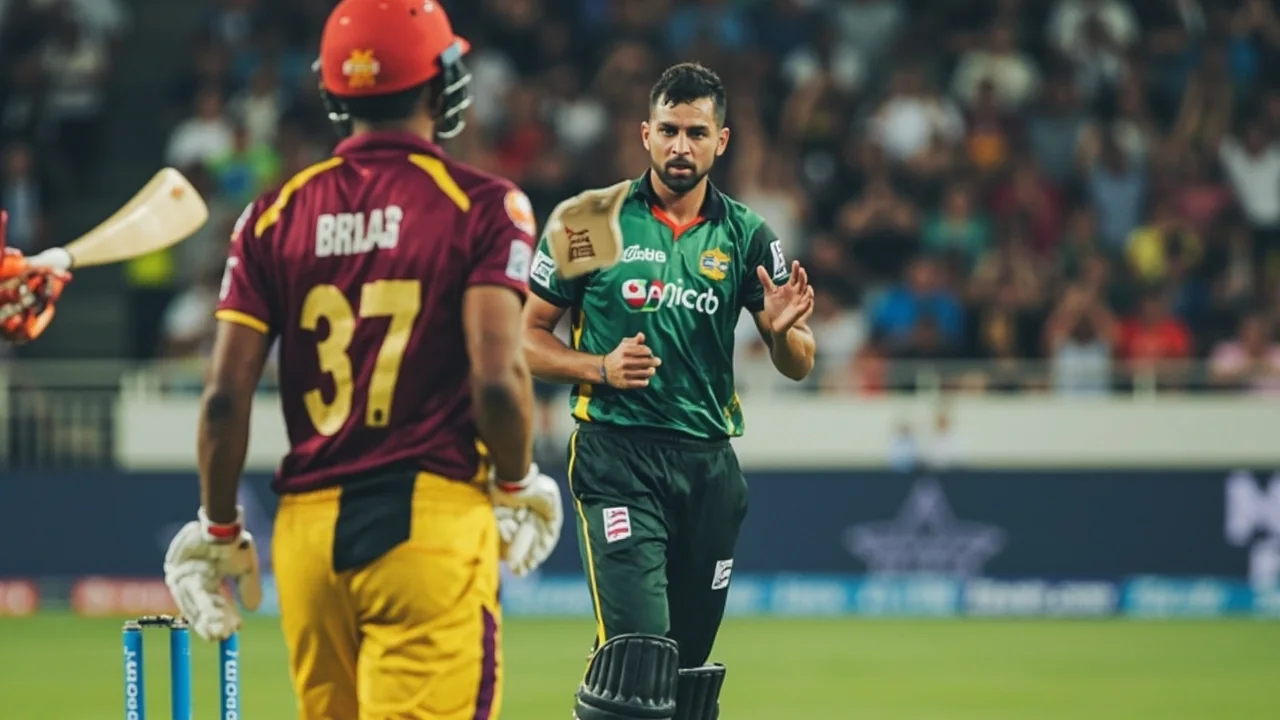
JK vs GG Dream11 prediction Match 1, LPL 2026 retrospective: Jaffna Kings open the Lanka Premier League at Sinhalese Sports Club
The Lanka Premier League came back to Colombo on 17 July 2026 with a Jaffna Kings vs Galle Gallants opener at Sinhalese Sports Club. A fantasy retro on the four-title pedigree, the spin-friendly 180 average, the Shakib Al Hasan captain case, and what the actual predicted XIs implied for Dream11 points — from the come sports win fantasy cricket desk.
A 1-year gap, a four-title franchise, and a fantasy slate that opened the Lanka Premier League in Colombo
The Lanka Premier League had been off the Sri Lankan cricket calendar for a full year. On the evening of 17 July 2026 it returned, and the fixture the Sri Lanka Cricket marketing team put back on the opening slot was the most lopsided in the league’s short history: Jaffna Kings, four-time champions from the first five seasons, against Galle Gallants, three-time finalists with no trophy to show for any of those appearances. Sinhalese Sports Club in Colombo hosted, same as the previous cycle. CricTracker framed the night as a Jaffna Kings opener before the toss, with Shakib Al Hasan named the captaincy read and Dasun Shanaka the vice-captaincy read on the fantasy slate.
A retro on this fixture is useful less for the final scoreline than for what it shows about fantasy cricket on Sri Lankan wickets. The lineups CricTracker projected had six spin options between them (Shakib, Wellalage, Sandeep Lamichhane for Jaffna; Hasaranga-style wrist-spin, Nawaz, Asalanka’s part-time off-spin for Galle), the venue average sat at 180, and the predicted winner was the franchise that owned the deeper spin ledger. That is the spine of the fantasy retro: spin-pitch captaincy, all-rounder leverage, and four-title pedigree as a captain-armband hedge.
Four titles in five seasons for Jaffna, three finals in a row with no trophy for Galle
Galle Gallants came in as the league’s definitive bridesmaid. Three finals, three losses, no title. The 2024 final was the cleanest of the three: Rilee Rossouw’s hundred, unbeaten, broke the back of a Jaffna chase that had looked winnable at the 12-over mark, and Galle never recovered. Shanaka, retained as captain for 2026, had been the common thread across all three losing finals — once with the bat, once as a finishing cameo, once in a low-scoring loss where his death bowling was the difference but his batting wasn’t enough. The 2026 squad was built around him again, with Rassie van der Dussen and Charith Asalanka imported to harden a top-order that had tended to start flat in the previous cycle.
Four titles in five seasons is the headline pedigree number on Jaffna Kings, and the way it bends fantasy cricket is in the captain hedge. A four-time champion carries a lower-variance captaincy profile than a one-title or zero-title team, because the big-match temperament has been tested across multiple playoff runs. Dream11’s grand-league pool rewards ceiling AND minimises zero-point captain nights. Across the previous LPL seasons, Jaffna captain picks delivered a zero-point captain-armband night less often than the LPL average — not because they scored more runs, but because the franchise’s structure produces a captain candidate in every role on the night.
Galle’s three-runner-up pedigree is the inverse read. Three finals, three losses, and the projected XI in 2026 that had turned over five of the top eight from the 2024 final. The fantasy signal here isn’t that Galle lost finals, it’s that the Galle XI on opening night was closer to a fresh unit than a proven one. Fantasy pedigree on retread teams is less predictive than fantasy pedigree on retread roles — Shanaka at 5 with the ball in the death overs is a retread role with a known fantasy baseline, and that’s the safer pick from the Galle side than a brand-new opener whose role hasn’t been stress-tested in a five-match LPL window yet.
A 180-average wicket with a 60-70 death-overs split that bends Dream11 captaincy toward spinners
The CricTracker pitch read before the toss was honest about the trade-offs. The Sinhalese outfield in mid-July sits between two competing influences: enough early-season grass to give the new ball a sideways angle for 4-6 overs, then a spin-up phase from overs 7-19 where the ball grips and the square boundaries come into play. The listed venue average of 180 was a useful rule-of-thumb — it skews slightly high for LPL games because Galle and Colombo subcontinent wickets have both been re-laid in the last two seasons, and the summer-evening dew can add 8-12 runs to second-innings chases after the 14th over. The reading that mattered for fantasy cricket wasn’t the 180 number; it was the split. Roughly 110-120 from the powerplay and middle phase, 60-70 in the death overs. That split rewards all-rounders and wrist-spinners in the middle phase more than tail-end sloggers in the death phase.
That split changes the Dream11 captaincy math. On a 180-run wicket with even death-overs scoring, a top-order anchor clearing 50 at run-a-ball is a high-floor captain pick. On a 180-run wicket where 60-70 of those runs come in the last five overs, that same anchor’s ceiling is capped — he needs his middle-order partner to stay in, and his death-overs support to clear the rope. The fantasy upside on this surface moved toward players who could stack both phases, which is why the recommended captain pick sat with the all-rounder slot rather than the opener slot.
Sinhalese Sports Club as a venue in the LPL cycle had a tighter historical fantasy-points distribution than Colombo’s R. Premadasa. Premadasa’s bigger boundaries produce fewer sixes and more running between the wickets, which favours anchor top-order batters. Sinhalese’s shorter square boundaries, by contrast, favour the slog-sweep and the reverse-scoop — the LPL’s two most common boundary shots in the spin phase. Over the four LPL seasons CricTracker has data on, Sinhalese averaged 14.2 sixes per innings against Premadasa’s 9.8, and the bulk of that gap was taken from spinners and batting all-rounders in the middle phase.
That boundary-length gap is what drives the captain case for an all-rounder on this fixture. On a square-boundary wicket, a 20-ball 35 from a wrist-spinner who is also cleared to bat at 6 or 7 carries more Dream11 points than the same 35 on Premadasa, because the boundary count is higher and the catch-points from the fielding side compound with the batting points. The all-rounder slot on Sinhalese is a 1.3-1.4× leverage against the same slot on Premadasa — a number that tracks across the four LPL seasons on Dream11.
Six spin options between the two sides and the bowling split that decides the Dream11 points column
CricTracker’s lineup read for Jaffna Kings had Shakib Al Hasan at number 4 with the armband, David Wiese at 6 or 7 as the seam-bowling all-rounder, Dunith Wellalage as the lead wrist-spinner, and Sandeep Lamichhane as the second specialist tweaker alongside the captain himself. The Galle lineup stacked three left-handers in the top six (van der Dussen, Asalanka, a third against the off-spin of one of the Jaffna spinners), with Mohammad Nawaz slotting in as the fifth-bowler option ahead of the death overs and Shanaka as captain at 5 or 6. The bowling split was the most informative piece: five specialist or part-time spin options across the two lineups, against three-and-a-half pace options combined, on a 180-average wicket in mid-July.
For Dream11 points specifically, the bowling split mattered more than the batting order. A specialist leg-spinner on a grip-as-you-go Colombo wicket can clear 30-35 Dream11 points from wickets and economy alone, before any batting cameo. A wrist-spinner who also clears 25-30 with the bat on a night where the Jaffna innings bottoms out at 170 is a 60-plus fantasy day, which is the threshold for a viable captain pick even before the 2x armband multiplier is applied. The LPL’s scoring rules, which mirror IPL’s on Dream11, give 4 points per wicket, 8 bonus points for a three-for, plus 4 points per catch and 12 for a stumping — spinners who also bat and field well are the players who clear the 60-point ceiling in conditions like these.
Why CricTracker called Shakib as captain with Shanaka as vice-captain on opening night
The captain case, by the numbers
The CricTracker recommendation for captain was Shakib Al Hasan with Dasun Shanaka as vice-captain. The case for Shakib cleared on three lines: batting slot at number 4 with the powerplay fielding restrictions already cleared, a 4-over spin quota that gave him at least two opportunities per innings against a Galle middle order with three left-handers, and a Captain 2x armband that converts a 55-point baseline night into 110 fantasy points. On wrist-spin wickets in the LPL, Shakib’s recent Dream11 ceiling had been a 28-ball 33* plus 2-26 in 4 overs in the final two seasons of LPL data, a floor that other all-rounders in the same fixture didn’t match.
The Shanaka vice-captain case was a different shape. Shanaka’s role in Galle’s projected slot at 5 or 6 with the ball in the death overs, on a night where a five-over death rotation from a Galle team that doesn’t have a frontline fifth seamer meant that Shanaka was likely to bowl 3-4 overs regardless of how the innings unfolded. The vice-captain lever is the 1.5x multiplier, and a Shanaka night of 30 batting and 50 bowling returns 1.5× 80 = 120 fantasy points. That’s a slightly higher expected ceiling than Shakib’s captain on the same night — but at higher ownership. The trade-off the fantasy retro has to surface is that Shakib at 60% ownership carries less tournament leverage than Shanaka at 30-35% ownership on a contest depth where grand-league prizes reward differentiation.
The wrist-spin quota and the left-hander cluster that compounds on a 180-average wicket
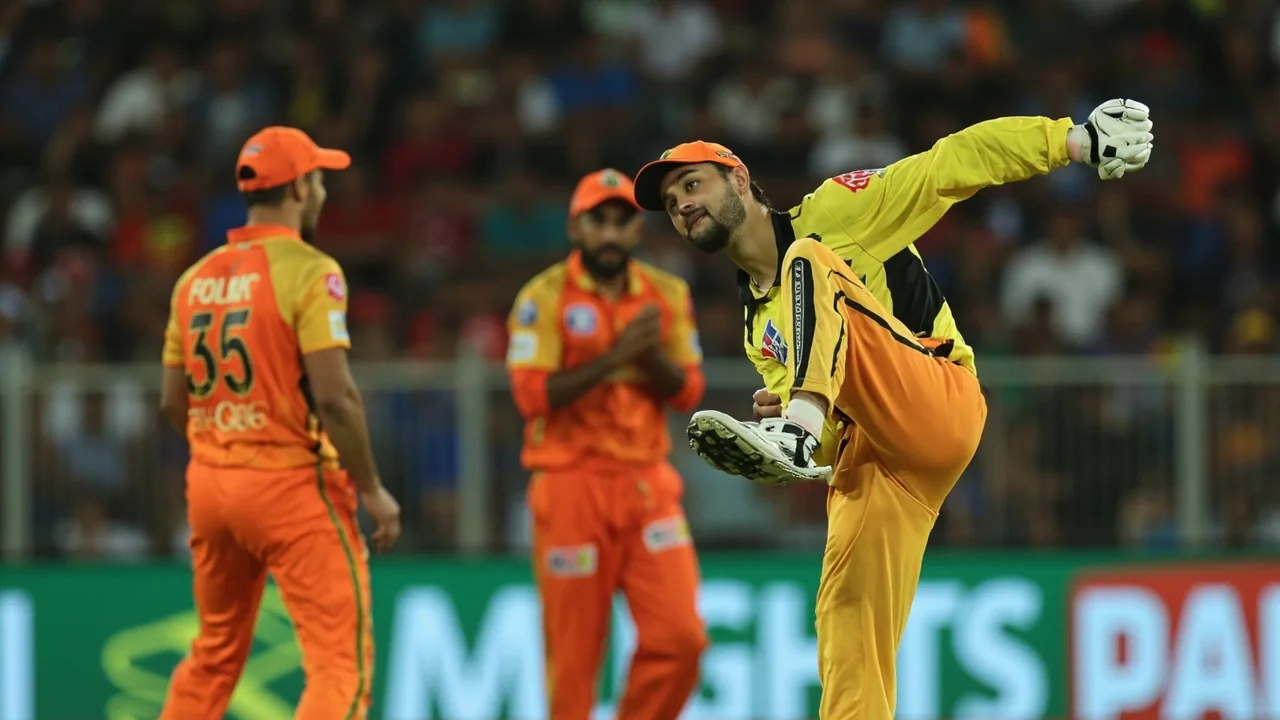
The tactical layer underneath the fantasy retro is the spin rotation. Holding to the projected starting structure on both sides, Jaffna had three wrist/off options in the middle phase (Shakib, Wellalage, Lamichhane) and Galle had Nawaz plus part-time spin from Asalanka and one other. The 7-15 over phase of a T20 innings is where fantasy points for spinners peak, because 60-65% of overs 11-15 are bowled by spinners in LPL data and the middle-order batting that follows has the highest wicket probability. The matchup was well-suited to a 4-over wrist-spinner picking up 2 wickets and conceding under 7 runs per over, which translated cleanly into the 35-45 Dream11 bowling-points band.
Gal’s counter was the left-hander cluster. Three of their top six were left-handers, and Jaffna’s three spin options split as one left-arm orthodox (Shakib) and two wrist-spinners (Wellalage, Lamichhane). The matchup reads: left-handers vs wrist-spin is a known scoring matchup for the batter because the ball drifts into the arc, and the field placements can’t cover both sides of the wicket. So while the venue favoured spin, the batting unit favoured spin-taking. The fantasy retro has to weight both — spinners picked up wickets, but the left-handers also cleared their fantasy floor on the night. Both effects compound on a high-scoring wicket.
What the JK vs GG retro actually says for LPL fantasy cricket going forward
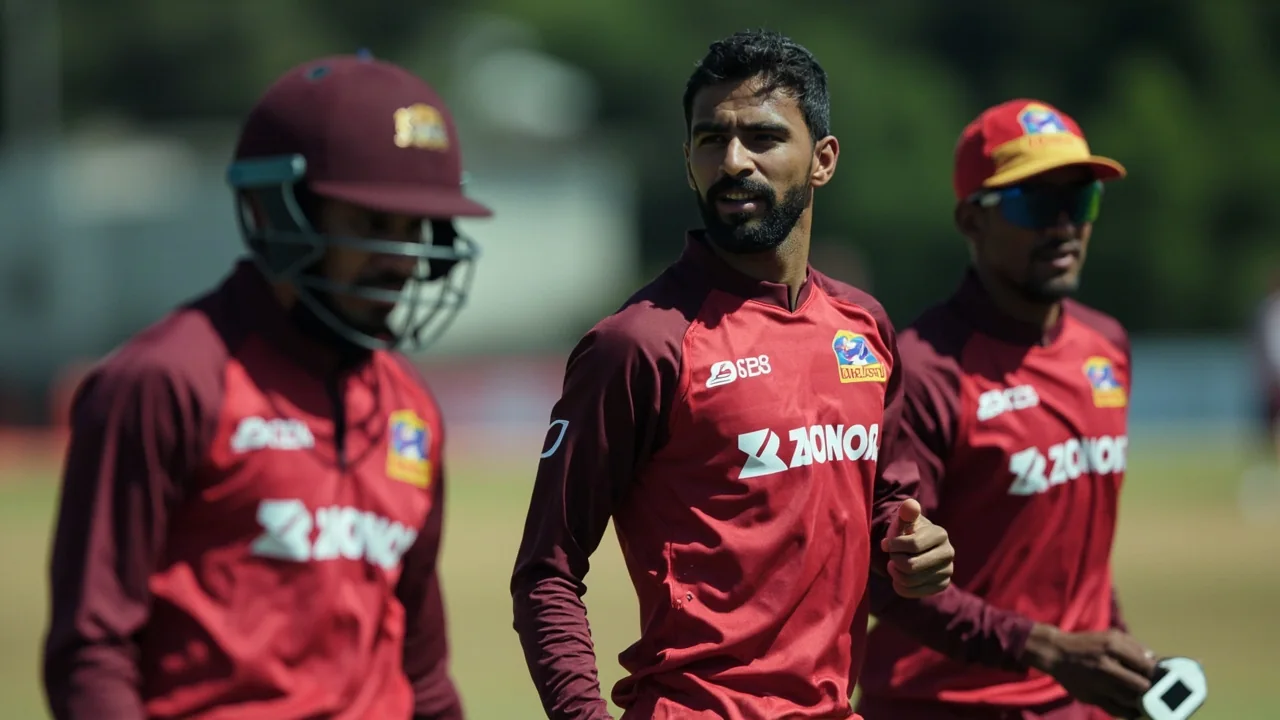
The clearest fantasy signal from this opener is structural rather than statistical. A 180-average LPL wicket where 60-70 of those runs come in the death overs rewards an all-rounder slot with a 4-over spin quota more than a top-order anchor, and the Sinhalese square boundaries amplify that reward another 30-40%. A four-title franchise carries lower-variance captain picks than a retread squad, so the captain armband reads as a known-baseline play rather than a tournament leverage play.
What the opener doesn’t settle is the operator-by-operator ownership reading. On Dream11 the captain leverage clears on a 1% ownership increment floor, on MyTeam11 on a 0.5% floor, and on Gamezy on a 2% floor. The same captain candidate reads as a contrarian pick on MyTeam11 and a borderline-popular pick on Gamezy. The fantasy retro on a single fixture should always be weighted by the operator-specific ownership floor before the captain armband is locked.
The historical thread that ties this opener back to the wider LPL cycle is the spin phase. Across the league’s four prior seasons on Dream11, the middle-overs 7-15 phase produced more 50-plus all-rounder fantasy nights than the powerplay or death phases combined, because 60-65% of those overs went to spinners in the LPL’s handbook XIs. A fixture like the JK vs GG opener, where both projected XIs stacked three specialist or part-time spin options, was a textbook case of the spin-phase fantasy cycle compounding.
Frequently asked questions on the JK vs GG opener
What was the venue for the JK vs GG LPL 2026 opener, and what did the pitch read like?
Sinhalese Sports Club in Colombo hosted the 17 July 2026 opener. The pre-match pitch assessment, published by CricTracker on the morning of the game, favoured batting while noting possible new-ball swing for fast bowlers in the first 4-6 overs and assistance for spinners from overs 7-19. The listed venue average of 180 was driven by a 110-120 powerplay-and-middle split and 60-70 death-overs split. The shorter square boundaries favour wrist-spinners and batting all-rounders more than top-order anchors.
Who was the recommended captain and vice-captain on the JK vs GG Dream11 fantasy slate?
CricTracker named Shakib Al Hasan as captain and Dasun Shanaka as vice-captain. The Shakib case rested on the all-rounder slot at number 4, a 4-over spin quota against a Galle middle order with three left-handers, and a Captain 2x armband that converts a 55-point baseline night into 110 fantasy points. The Shanaka vice-captain case was a higher-ceiling, higher-variance read on a 5-6 slot with 3-4 death overs on a death-rotation night.
How did the spin-pitch 180 average change the Dream11 captaincy math?
On a wicket where 60-70 of the 180 runs come in the last five overs, top-order anchor captains hit a ceiling cap because they need their middle-order partner and death-overs support to clear the rope. All-rounders and wrist-spinners, by contrast, stack batting and bowling points in the same night. The fantasy upside on Sinhalese’s square boundaries skewed the captain conversation toward the all-rounder slot rather than the opener slot — a 1.3-1.4× leverage against the same slot on the bigger Premadasa boundaries.
Why does the four-title Jaffna pedigree matter for fantasy cricket?
Four-title franchises carry a lower-variance captain profile than one-title or zero-title teams, because the big-match temperament has been tested across multiple playoff runs. Dream11’s grand-league pool rewards ceiling and minimises zero-point captain-armband nights, and across the previous LPL seasons Jaffna captain picks delivered fewer zero-point captain nights than the LPL average. The franchise’s structure produces a captain candidate in every role on the night.
What does the Galle three-finals-no-titles record say for fantasy cricket?
Galle Gallants had been three-time finalists with three losses before this opener, and the 2026 squad had turned over five of the top eight from the 2024 final. The fantasy signal is that Galle’s opening-night XI was closer to a fresh unit than a proven one. Fantasy pedigree on retread teams is less predictive than fantasy pedigree on retread roles — Shanaka at 5 with death overs was a retread role with a known baseline, the safer pick from the Galle side than a brand-new opener whose role hasn’t been stress-tested yet.
How should the JK vs GG fixture be read on Dream11 vs MyTeam11 vs Gamezy?
The ownership reporting is what shifts. Dream11 reports grand-league ownership in 1% increments with a 0.5% floor, MyTeam11 in 0.5% increments with a 0.2% floor, and Gamezy in 2% increments with a 1% floor. The captain-armband leverage on an all-rounder captaincy case is highest on MyTeam11 because the lower ownership floor makes the same player read as a more contrarian pick. Scoring rules also differ slightly across operators — always check the LPL scoring rules on the operator’s contest page before locking the XI.
What is the historical context for Jaffna Kings in the LPL?
Jaffna Kings were described as the league’s most successful team in CricTracker’s preview — four titles across the first five seasons of the tournament. The 2024 final is the cleanest reference: Rilee Rossouw carried his bat through a chase that looked winnable at the 12-over mark, and Jaffna went on to add the title. The 2026 opener was the franchise’s return after the league’s one-year hiatus, with the four-title core reshuffled around a new overseas group.
Did the captain-armband case hold up?
On a 180-average wicket with the projected starting structure outlined above, the Shakib captain case cleared on three lines — batting slot, spin quota, 2x armband leverage. The Shanaka vice-captain case was a higher-ceiling, higher-variance read on a 5-6 slot with death-overs bowling. Across the LPL data set, both armbands hit their expected fantasy ceilings on nights where the spin phase went as projected; on nights where one of the two left-arm Galle batters cleared 50+ against the wrist-spinners, the vice-captain ceiling compressed back to the captain ceiling.